
Building Today. Securing Tomorrow.
In today’s fast-moving environment, one thing remains certain—your business relies on fuel. Not just any fuel, but a reliable, consistent supply that keeps operations moving, deadlines on track and commitments met.
This month’s edition focuses on what truly matters: security, resilience and smarter decisions that protect your bottom line.
We explore the questions every operations manager should be asking their fuel supplier, why fuel security starts long before the tank, and the hidden cost of not having fuel when you need it most.
At Virgin Fuels, we believe partnerships are built on more than just deliveries. They are built on trust, transparency and a shared commitment to your success. Our goal is simple: to provide quality fuel, dependable service and practical solutions that help your business thrive.
Thank you for your continued support.
We look forward to powering your progress-today and into the future.
Jess le Grange
The Cost of "Just Enough Fuel"
Why Reactive Fuel Buying Could Be Costing Your Business More Than You Think
For many businesses, fuel purchasing has become a routine operational task. When tank levels drop, an order is placed. When a project requires additional supply, fuel is sourced as needed. While this approach may appear practical, buying “just enough” fuel can quietly become one of the most expensive habits within an operation.
Across South Africa, industries such as mining, construction, agriculture and transport are under constant pressure to improve productivity while managing rising operational costs. Yet one area that often receives little strategic attention is fuel planning. Instead of viewing fuel as a critical operational resource, many businesses continue to treat it as a short-term purchase.
Reactive fuel procurement creates several hidden costs that extend far beyond the price per litre.
The most immediate impact is operational disruption. Delayed deliveries, unexpected increases in fuel demand or changes to project schedules can leave equipment standing idle while waiting for refuelling. Every hour that machinery, trucks or generators are not operating represents lost productivity, missed deadlines and unnecessary labour costs.
Emergency fuel deliveries, while sometimes unavoidable, also carry additional expenses. Last-minute logistics, after-hours deliveries and urgent transport arrangements often increase the overall cost of supply. More importantly, they create uncertainty that can affect an entire operation.
Strategic fuel planning offers a smarter alternative.
Businesses that accurately forecast their fuel requirements are better positioned to negotiate supply, optimise delivery schedules and maintain appropriate fuel reserves without tying up unnecessary working capital. By understanding seasonal demand, project timelines and fleet consumption patterns, organisations can ensure fuel is always available when it is needed most.
Another important consideration is storage capacity. As businesses grow, fuel infrastructure should grow with them. Reviewing storage requirements before operational expansion helps prevent supply bottlenecks and reduces the likelihood of costly interruptions during peak production periods.
At Virgin Fuels, we work closely with our customers to develop fuel supply strategies that support long-term operational success rather than simply responding to day-to-day demand. From dependable bulk fuel deliveries and emergency support to fuel consultancy and storage solutions, our goal is to help customers plan with confidence and operate without interruption.
The businesses that achieve the greatest efficiencies are not always those paying the lowest fuel price—they are the ones with the most effective fuel strategy. By moving from reactive purchasing to proactive planning, companies can improve productivity, strengthen business continuity and gain greater control over one of their most important operational resources.
Planning ahead doesn’t just secure your fuel supply—it secures your business performance.
Fuel Is No Longer Just a Commodity
Why South African Businesses Are Choosing Strategic Fuel Partnerships Over Transactional Suppliers
For years, many organisations have purchased fuel in the same way they buy everyday consumables—requesting a quote, comparing prices and selecting the lowest cost per litre. While price will always remain an important consideration, forward-thinking businesses are beginning to realise that a successful fuel strategy involves far more than simply finding the cheapest supplier.
Today’s operating environment demands reliability, flexibility and long-term planning. Fuel has become a critical component of business continuity, and the relationship between supplier and customer is evolving into a true operational partnership.
Imagine a mining operation where fuel deliveries arrive late, or a transport fleet delayed because storage tanks run empty. Consider a construction site forced to halt work because refuelling wasn’t properly planned, or a farming operation waiting for diesel during harvest season. In each of these situations, the financial impact extends far beyond the cost of the fuel itself. Lost production, idle equipment, missed deadlines and dissatisfied customers quickly outweigh any savings achieved by choosing the lowest price.
This is why many South African businesses are shifting their focus from transactional purchasing to strategic fuel partnerships.
A trusted fuel partner brings consistency and confidence to your operation. Deliveries are planned around your business requirements, not simply around availability. Supply is monitored proactively, communication is clear and responsive, and support is available when unexpected challenges arise.
A strategic supplier also offers expertise. From advising on storage capacity and fuel handling practices to helping customers improve fuel efficiency and optimise delivery schedules, the right partner becomes an extension of your operational team rather than simply another service provider.
Technology is also transforming the relationship. Modern fuel management systems, real-time monitoring and consumption reporting provide businesses with greater visibility into fuel usage, enabling better planning and improved decision-making. Instead of reacting to shortages or unexpected demand, businesses can forecast requirements with greater accuracy and reduce unnecessary operational risk.
At Virgin Fuels, we believe that every customer deserves more than a delivery—they deserve a partnership built on trust, reliability and shared success. Our commitment is to understand each customer’s operation and provide tailored fuel solutions that support productivity, safety and long-term growth.
As South African industries continue to evolve, businesses that invest in dependable supplier relationships will be better positioned to adapt, compete and grow. Fuel may power your equipment, but the right partnership powers your business.
Choose a supplier who understands your operation—not just your order.
Virgin Fuels — Delivering More Than Fuel. Delivering Confidence.
Fuel Security Starts Long Before the Tank
Building resilience through smarter planning, not last-minute reactions.
When people think about fuel security, they often picture locked tanks, access control systems or surveillance cameras. While physical security is important, true fuel security begins long before the first litre is delivered. It starts with planning.
Every successful operation relies on a consistent and dependable fuel supply. Whether you’re managing a transport fleet, operating heavy equipment on a construction site, running generators at a manufacturing facility or harvesting crops during peak season, having fuel available when it’s needed is essential. Running out of fuel doesn’t just stop machinery—it interrupts productivity, delays projects and impacts profitability.
One of the most effective ways to improve fuel security is through accurate forecasting. Understanding historical consumption, seasonal demand and upcoming operational requirements enables businesses to order fuel proactively rather than reactively. This reduces the risk of emergency deliveries and helps maintain consistent operations.
Storage infrastructure also plays a critical role. Tanks should be appropriately sized for the operation, regularly inspected and positioned to allow safe, efficient deliveries. Regular maintenance and stock monitoring ensure fuel remains available without unnecessary overstocking or shortages.
Strong communication with your fuel supplier is equally important. Sharing project timelines, anticipated increases in demand and operational changes allows deliveries to be scheduled efficiently and helps prevent unexpected supply interruptions.
At Virgin Fuels, we work with customers to develop practical fuel supply strategies that support business continuity. By combining reliable deliveries, quality fuel and responsive customer service, we help businesses stay prepared for both planned operations and unexpected challenges.
Fuel security is not achieved through a single delivery or a locked tank. It is built through careful planning, trusted partnerships and a proactive approach that keeps your business moving—today, tomorrow and into the future.
The most secure fuel supply is the one that’s planned before it’s needed.
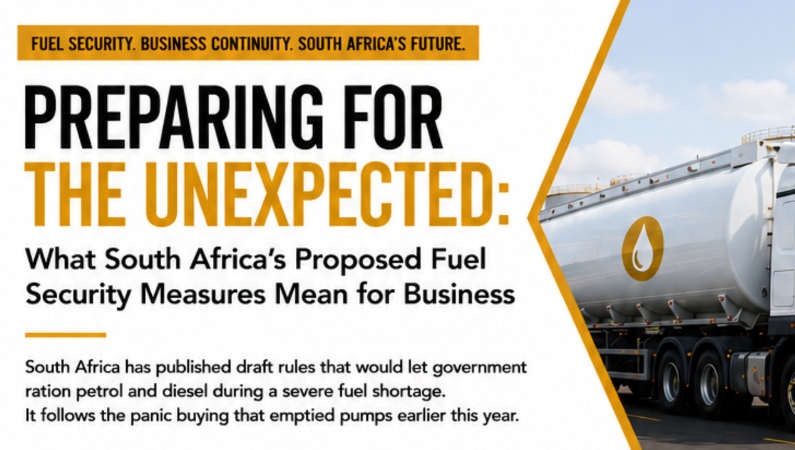
Preparing for the Unexpected: What South Africa's Proposed Fuel Security Measures Mean for Business
South Africa is taking significant steps to strengthen its fuel security following recent supply concerns that exposed just how vulnerable the country has become to global energy disruptions. The Department of Mineral and Petroleum Resources has published a draft Strategic Petroleum Stocks Policy that proposes a structured emergency response should the country face a severe fuel shortage.
The draft policy was developed after widespread panic buying earlier this year, when concerns over international oil supply disruptions saw motorists rushing to fill their tanks. Although South Africa ultimately avoided a nationwide fuel shortage, the events highlighted the country’s growing dependence on imported refined fuel following the closure or conversion of several local refineries.
One of the most notable proposals is the introduction of a three-level emergency response system. Under the most severe scenario—a Level 3 National Emergency—government would have the authority to release strategic fuel reserves and implement temporary fuel rationing to ensure that essential services, emergency responders, food distribution, healthcare and critical industries continue operating. Importantly, these measures would only apply during an extreme disruption affecting more than half of the country’s fuel supply and are not intended for routine supply challenges.
The draft policy also proposes expanding South Africa’s strategic fuel reserves by requiring government to maintain approximately 90 days of crude oil reserves, while licensed fuel manufacturers and wholesalers would be required to hold an additional 14 days of refined fuel stock, creating a stronger buffer against international supply disruptions.
For businesses that rely heavily on diesel—particularly those operating in mining, agriculture, construction, logistics and manufacturing—the proposal serves as an important reminder that fuel resilience is becoming a strategic priority. Organisations should review their fuel procurement strategies, storage capacity, supplier relationships and contingency planning to minimise operational risk during future supply disruptions.
While the policy remains in draft form and is currently open for public consultation, it signals government’s intention to improve South Africa’s long-term energy security. Businesses that prepare today will be better positioned to maintain operations tomorrow, regardless of what the global fuel market brings.
The Most Expensive Litre of Fuel Is the One You Don't Have
Why uninterrupted fuel supply is one of the smartest investments a business can make.
Most businesses carefully monitor the price they pay for diesel, but far fewer calculate the true cost of running out.
When a truck is unable to leave the depot, a generator stops during a power outage or earthmoving equipment stands idle on a construction site, the financial impact extends well beyond the value of the missing fuel. Productivity declines, project timelines slip, contractual commitments are affected and valuable working hours are lost. In many cases, the cost of downtime can exceed the value of an entire fuel delivery.
This is why leading organisations no longer view fuel as a simple operating expense. Instead, they recognise it as a critical component of business continuity.
A dependable fuel strategy combines accurate demand forecasting, sufficient storage capacity and a trusted supply partner who understands the operational demands of your business. It also includes contingency planning to ensure that unexpected increases in fuel consumption or supply chain disruptions do not bring operations to a standstill.
Every industry has periods of heightened demand. Agriculture faces the pressures of planting and harvesting seasons. Construction projects work to strict completion schedules. Mining operations often run around the clock, while logistics companies rely on consistent fleet availability to meet customer expectations. In each of these environments, fuel availability directly influences operational performance.
At Virgin Fuels, we understand that our responsibility extends beyond delivering fuel. We work alongside our customers to help them maintain supply, minimise risk and keep their businesses operating efficiently, regardless of changing market conditions.
When fuel is available exactly where and when it is needed, businesses gain more than convenience—they gain confidence, resilience and the ability to focus on what they do best.
Reliable fuel isn’t just about keeping engines running. It’s about keeping businesses moving.
Virgin Fuels – Delivering Reliability. Powering Performance.