Spring Forward. Power What’s Next.
September brings a sense of renewed energy and opportunity. As South African businesses enter the final stretch of 2026, it is a good time to look ahead, reassess priorities and make sure operations are ready for what comes next.
This month’s newsletter looks beyond the fuel tank to the bigger issues affecting our customers — from fuel quality and South Africa’s changing freight landscape to agriculture, infrastructure development, energy resilience and mining.
At Virgin Fuels, we know that our role is about more than delivering diesel. It is about helping our customers operate with greater confidence through quality fuel, reliable supply, responsive service and smarter fuel solutions.
As the season changes, our commitment remains the same: to be a dependable partner that helps keep your business moving.
Thank you for your continued trust and support.
Here’s to a productive spring and a strong finish to 2026.
Nico Le Grange
CEO, Virgin Fuels
What’s Really In Your Tank?
Why fuel quality is becoming a business-risk conversation
When diesel arrives on site, most businesses check the litres. Fewer ask an equally important question: what exactly is in those litres?
Fuel adulteration has become a serious issue in South Africa. Government has specifically highlighted the illegal blending of diesel with illuminating paraffin, warning that fuel adulteration can damage equipment, distort the market and undermine confidence in the fuel industry.
For businesses running trucks, generators, agricultural machinery, mining equipment or construction fleets, this is more than a compliance story. It is an asset-protection issue.
Modern diesel engines operate under demanding conditions. Poor-quality or contaminated fuel can contribute to inefficient combustion, blocked filters, injector problems, increased maintenance and unexpected downtime. A cheaper litre can quickly become an expensive one when equipment stops working.
That changes the fuel-buying conversation.
Procurement teams should look beyond bulk diesel prices and consider fuel quality, supplier credibility, traceability, delivery controls and testing procedures. Knowing where your diesel comes from matters just as much as knowing what you paid for it.
At Virgin Fuels, every truckload is laboratory tested before delivery, giving customers an additional level of confidence in the fuel entering their operations.
Because the true value of diesel isn’t measured when it enters the tank. It’s measured by what that fuel allows your business to achieve.
When equipment, vehicles and production depend on every litre, quality isn’t an optional extra.
It is operational insurance.

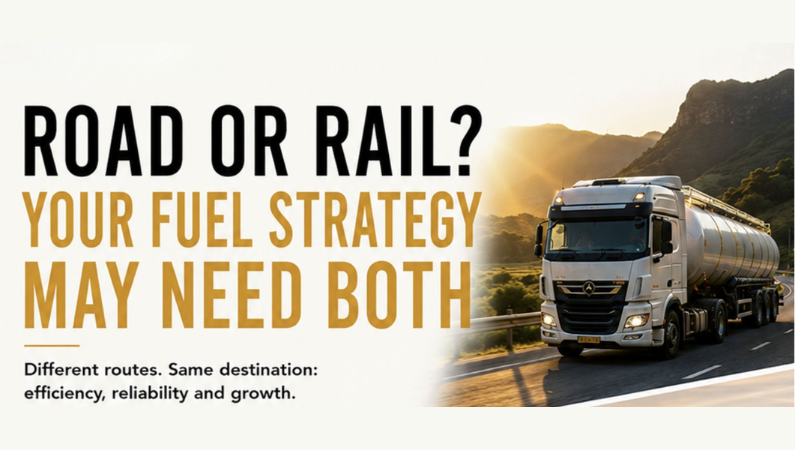
Road Or Rail? Your Fuel Strategy May Need Both
South Africa’s changing freight landscape could reshape how businesses move goods
For years, South African businesses have built logistics strategies around one uncomfortable reality: when rail cannot move the load, trucks must.
That landscape is beginning to change.
South Africa’s freight rail reform programme has moved from policy towards implementation. The first 11 private Train Operating Companies were approved for access to the national freight rail network in March 2026, with operations expected from April 2027. Together, these operators plan to move up to 24 million tonnes of freight annually. Transnet Freight Rail has also reported a 4.4% year-on-year improvement in first-quarter volumes.
For fuel-dependent businesses, this does not mean trucks – or diesel – disappear.
It means the logistics equation changes.
More efficient rail could gradually shift certain long-distance bulk movements away from road, while trucks remain essential for first-mile collection, last-mile delivery, regional distribution and routes not adequately served by rail.
Businesses should therefore start thinking beyond road versus rail and towards an integrated supply chain.
Where should fleets be positioned? Could shorter road legs improve fuel efficiency? Will distribution hubs change? Could diesel consumption move from long-haul routes towards more regional operations?
The businesses that benefit most from logistics reform may be those that adapt before the changes arrive.
At Virgin Fuels, we believe fuel planning should follow the operation – not yesterday’s assumptions.
South Africa’s freight network is changing.
Your fuel strategy should be ready to move with it.
A Bigger Harvest Doesn’t Guarantee Bigger Margins
Why South African agriculture is entering a season where every litre needs to work harder
There is encouraging news coming from South Africa’s fields.
The latest Crop Estimates Committee forecast puts the country’s 2026 commercial maize crop at approximately 17.4 million tonnes – around 4.5% higher than the previous season.
But a bigger crop does not automatically mean an easier year for farmers.
Agricultural margins are being squeezed by a difficult combination of lower commodity prices, high input costs, financing pressure and weather uncertainty. Recent agricultural outlooks are therefore pointing towards productivity and cost control becoming increasingly important.
And that puts diesel firmly under the microscope.
Every unnecessary tractor hour, poorly planned fuel delivery, avoidable trip and litre lost through inefficient operations ultimately eats into the margin generated by the crop.
For farmers, contractors and agricultural businesses, fuel efficiency is becoming financial efficiency.
That means understanding diesel consumption by activity rather than simply monitoring total litres purchased. How much fuel is used during land preparation? Planting? Irrigation? Harvesting? Transport? Where are machines idling unnecessarily, and are fuel deliveries being scheduled around actual operational demand?
Small efficiencies multiplied across hundreds of hectares can become meaningful savings.
Virgin Fuels supports agricultural customers with dependable bulk diesel delivery, fuel storage solutions and fuel planning designed around the realities of seasonal operations.
Because when margins tighten, success isn’t necessarily about using less fuel.
It’s about getting more productive value from every litre.

R1.9 Trillion Is About To Get To Work
South Africa’s infrastructure pipeline could create a new wave of fuel demand
South Africa is talking infrastructure again – but this time the numbers are difficult to ignore.
Government’s current infrastructure pipeline comprises 81 Strategic Integrated Projects and 263 individual projects with a combined estimated value of almost R2 trillion. The programme spans municipal infrastructure and other development projects intended to stimulate investment and economic activity.
For construction companies, contractors, equipment operators and their suppliers, this represents opportunity. But turning investment into kilometres of road, new buildings and functioning infrastructure requires something much less glamorous:
Machines that keep moving.
Excavators, graders, loaders, cranes, generators, trucks and other heavy equipment remain heavily dependent on diesel. As project activity increases, fuel therefore becomes more than another procurement item. It becomes part of project planning.
A construction site without diesel can lose productive hours quickly. Equipment stands idle, operators wait, subcontractors fall behind and project schedules begin slipping.
That is why contractors should be asking a different question before mobilisation: is our fuel infrastructure ready for the scale of the project?
Forecast consumption according to construction phases. Establish suitable on-site storage. Schedule bulk diesel deliveries around working patterns rather than emergencies. Monitor usage and ensure there is enough contingency stock for unexpected demand.
This matters even more when diesel prices are volatile. Rising fuel costs have already placed pressure on construction margins during 2026, particularly where contracts offer limited protection against significant increases.
Virgin Fuels helps construction and industrial customers build reliable fuel supply into their operations from the start.
Because South Africa’s infrastructure ambitions will ultimately be delivered by people and machines on the ground.
And those machines need to keep moving.
Load Shedding Is Down. So Why Keep The Generator?
South Africa’s improving grid is changing backup-power strategy – not eliminating it
For years, South African businesses had a simple energy strategy: prepare for the lights to go out.
Generators became part of everyday operations. Diesel stocks were monitored closely, backup systems were tested constantly and businesses planned around load shedding.
Now the picture is changing.
Eskom reported on 28 August that its year-to-date Energy Availability Factor had reached 67.87% – its highest level since 2020. Improved plant performance has also dramatically reduced Eskom’s own dependence on diesel-fired generation, with diesel expenditure falling by R4.89 billion, or 82.38%, year-on-year.
That’s good news for South Africa.
But does a more reliable grid mean businesses can forget about backup power?
Not necessarily.
The conversation should move from constant generator dependence to intelligent contingency planning.
Generators may run less frequently, which creates a different risk: complacency. Fuel can remain stored for longer. Maintenance intervals can be overlooked. Businesses may reduce reserves too aggressively or discover during an unexpected outage that backup systems aren’t ready.
Critical operations – from manufacturing facilities and warehouses to farms, mines and data-driven businesses – still need business-continuity plans.
The smarter approach is to reassess.
How much backup diesel does the business genuinely require now? How quickly can additional fuel be delivered? Is stored diesel being managed correctly? Are generators being maintained and tested? And does the organisation have a reliable supplier available when unexpected demand occurs?
Improving electricity reliability should reduce unnecessary diesel consumption. That’s a positive development.
But resilience isn’t about burning more fuel. It’s about having the right fuel available when you actually need it.
Virgin Fuels provides dependable bulk diesel supply and fuel solutions that help businesses plan for everyday operations as well as the unexpected.
Because the best backup plan is one you rarely need, but can trust completely when you do.
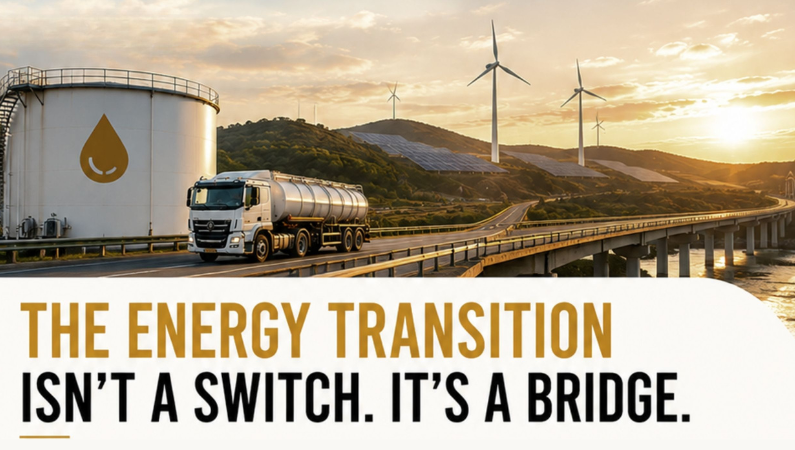
The Energy Transition Isn’t A Switch. It’s A Bridge.
Why South African mines are combining tomorrow’s energy with today’s operational realities
South African mining is changing faster than many people realise.
Major mining companies are accelerating investment in renewable energy to reduce electricity costs, improve energy security and meet decarbonisation targets. Sibanye-Stillwater expects renewables to supply around 64% of its South African energy requirements by 2028, while a 68MW solar facility at Exxaro’s Grootegeluk mine has reduced that operation’s grid dependence by approximately 30%.
It sounds like the beginning of the end for traditional energy.
The reality is more interesting.
A modern mine may use solar power, renewable-energy agreements, grid electricity and increasingly sophisticated technology – while simultaneously depending on diesel to move thousands of tonnes of material every day.
Haul trucks still run. Excavators still dig. Loaders still move material. Contractors still travel across site. Generators and mobile equipment still support production.
The energy transition is therefore not simply about replacing one energy source with another.
It’s about managing an increasingly complex energy mix intelligently.
For fuel-dependent operations, that means diesel efficiency becomes more important, not less.
Mining businesses should understand consumption by machine, shift and activity. Unnecessary idling should be identified. Delivery schedules should align with production requirements. Storage capacity should reflect real consumption, while fuel quality and handling must protect increasingly expensive equipment.
Every litre saved through better management reduces operating costs and emissions without compromising production.
Virgin Fuels sees the future of fuel supply in exactly this context: helping customers obtain the energy they need reliably, efficiently and responsibly while their operations evolve.
South African mining isn’t standing still, and neither should its fuel strategy.
The mine of tomorrow will use energy differently.
But the businesses leading that transition will be those capable of balancing future ambition with today’s production reality.