
Dear Reader
Thanks to a unique combination of the pandemic and a series of sociopolitical events ‒ both domestic and international ‒ times are tough. Fuel prices remain high, electricity is intermittent at best, and every sector is suffering as a result. Keep reading to learn what this means for all South Africans.
Food Supply At Risk
Ever-rising input costs are a problem for everybody. Many industries are suffering from rising fuel costs, forcing them to pass their costs down the value chain, which ultimately ends up with consumers having to pay more. However, one industry that is suffering more than most is the agricultural sector.
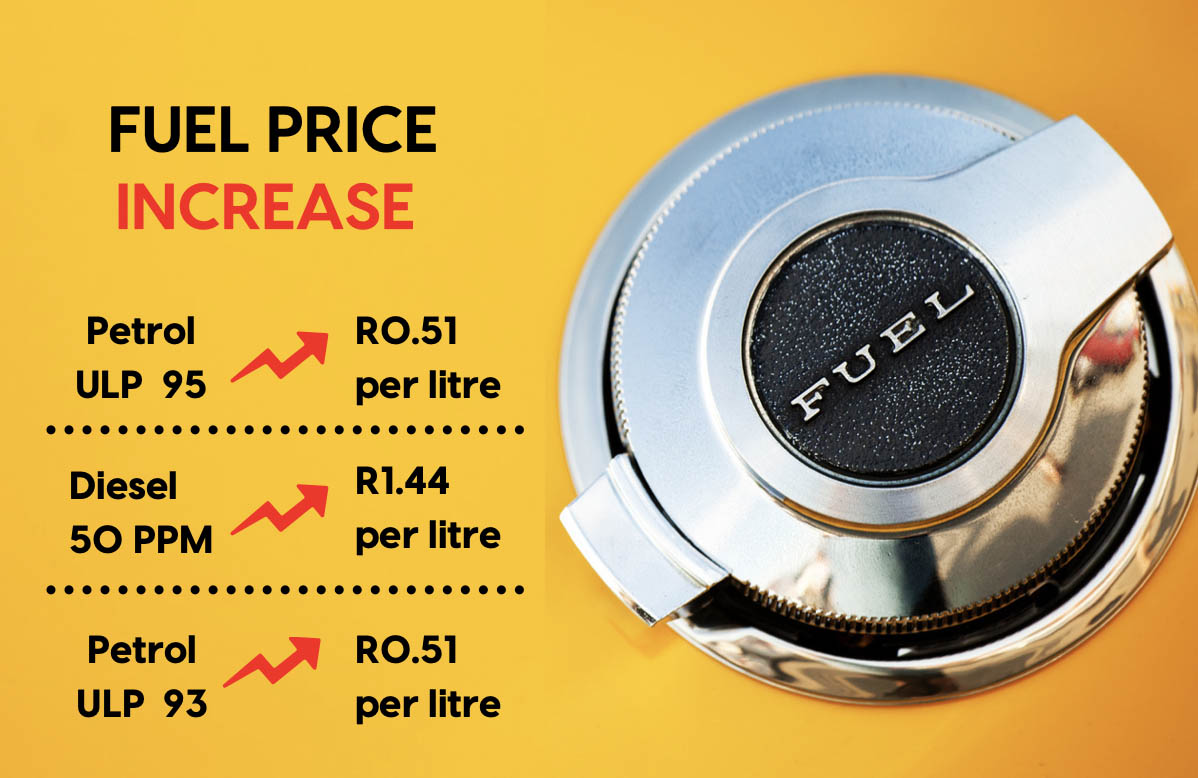
Earlier this month, the Automobile Association warned that diesel prices could rise by as much as R1.60 next month. Currently, the diesel price is already R8 higher than a year ago, with no sign of decreases on the horizon.
With most agriculture operations depending heavily on diesel to run their equipment, it is no wonder that farmers are struggling to make ends meet. Experts are saying that if these price hikes continue, they will put farmers out of business, leading to food security concerns.
How The Fuel Price Increases
Price increases in petrol and diesel have been a major focal point for the past few months. With almost daily announcements of further increases, many people have asked what actually causes South Africa’s massive pricing increases.
Above all else, the price of petrol and diesel is determined by movements in the international price of crude oil. The conflict between Ukraine and Russia has significantly impacted the price of oil, with Russia being a major supplier of crude oil. Until the conflict is resolved, it is expected that the fuel price will remain high.
Aside from the basic law of supply and demand, the other thing that affects the fuel price in South Africa is the fact that crude oil is traded with a US dollar price tag. If there is an unfavourable exchange rate between the South African rand and US dollar ‒ i.e. if the South African rand is weak and the dollar is strong ‒ then this will further increase the price for South Africans.
On top of the international factors we have no control over, the fuel price is also made up of a series of levies and taxes ‒ the main one being the fuel levy itself, which makes up 20% of the retail price. Added to this is the road accident fund levy, which makes up another 11% of the total price.
Another levy to consider is the gross margin allowed for the operators and filling stations, for which they take 10% of the retail price. In other words, locally imposed levies make up more than 40% of the local fuel price.
How Fuel Is Supplied To South Africans
Almost No Local Production Anymore
South Africa’s local refinery production is in a state of decline. Where we once had up to six refineries in the country ‒ four of them refining crude oil and the other two refining oil from coal-to-liquids or gas-to-liquids ‒ we now only have one refinery remaining in operation. The others have been mothballed or decommissioned for one reason or another.
South Africa Imports Its Fuel
South Africa imports most of its fuel as a net importer of fuel. South Africa produces less fuel than it imports to meet domestic demand. There has been some debate about whether this affects the consumer’s fuel price. However, experts have said that the costs of importing versus the cost of local production are roughly equivalent.
Fuel Is Piped Up To Gauteng
Fuel that arrives in Durban is piped all the way up to Gauteng to support the province’s demand for fuel. Being the country’s business hub, Gauteng accounts for about 65% of national demand for fuel. This is why inland fuel is more expensive than coastal fuel ‒ owing to the inland transport costs.
Mixed Bag
South Africa has always met its fuel demand through various means, including local production. However, the older refining infrastructure has reached a point where significant investment would be required to get it back up and running. The cost of doing so might very well outstrip the cost of importing, making it not worth the while. As a result, South Africa is moving inexorably towards just being an importer of the finished product.

Should We Be Worried About Load Shedding Level 15?
Eskom CEO Andre De Ruyter has said that meeting minimum emissions standards would cost the company at least R300 billion because it would have to retrofit all of its power stations with equipment that can clean the air.
Since retrofitting the power stations is not possible, Eskom will be forced to decommission them, losing 16 GW immediately and about another 30 GW by 2025. If nothing is done to counter this, 100 000 jobs and stage 15 load shedding could eventually be on the cards.
Rebuilding new coal-fired power stations could take 10 to 12 years to replace the lost energy capacity. They are also environmentally unsustainable. Therefore, Eskom is leaning heavily into renewable energy technology in the hope that it can be rolled out faster, owing to Eskom supporting the rollout of renewable energy by private power producers. Eskom has said that renewable energy options are the least expensive options for generating new capacity in the short term.
Keep reading our newsletters for more interesting and informative news affecting the fuel industry! Stay tuned for more.