
Dear Reader
Even though the Covid-19 pandemic has started to wind down, the conflict in Ukraine and various other inflationary pressures around the globe continue to put pressure on the markets. With that in mind, let’s take a look at some of the most pressing news in the world of petroleum and petrol products today.
Petrol And Diesel Price Misalignment
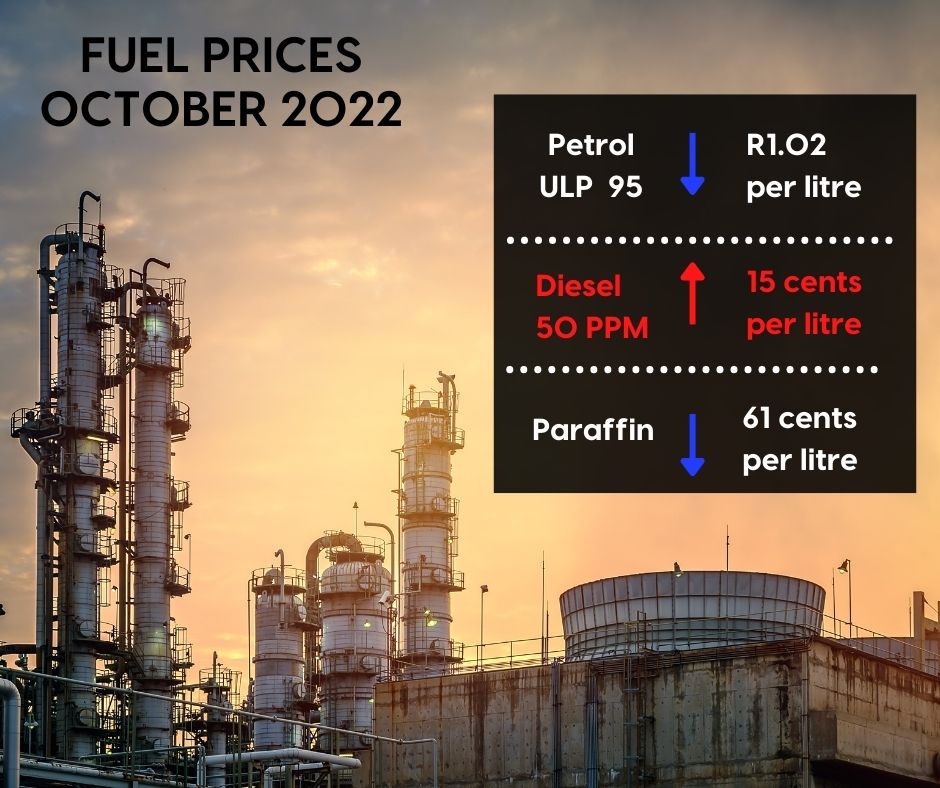
Typically, South Africa’s diesel and petrol prices have always been somewhat aligned. However, this has changed in the last few months with diesel prices expected to continue going up even as the cost of petrol is expected to come down.
The Central Energy Fund’s latest findings show that petrol prices can expect to reduce by as much as R1.20/ℓ in October, while diesel is set to increase by between 25 c/ℓ and 31 c/ℓ. The reason for this disparity is attributed to the ongoing conflict between Russia and Ukraine, which has driven the demand for diesel through the roof with no end in sight for the foreseeable future.
The high demand has meant that diesel prices remain elevated for now.
Light At The End Of The Load Shedding Tunnel?
Once again, South Africa has been plunged into an intensive bout of load shedding that has gone on for weeks, reaching highs not seen in years ‒ going as high as level six.
This constant interruption of electricity is not just inconvenient but is extremely damaging for the economy as businesses are forced to hang up their tools while they wait for the power to come back on. It also has an extremely negative impact on investment in the country owing to the instability of service provision in the form of energy.
However, President Cyril Ramaphosa said late last month that although Eskom’s problems were dire and far-reaching, progress was being made to address the shortfall in the medium to long term.
Among these are Eskom’s plant performance interventions which are being prioritised to ensure that the existing generation capacity remains functional until new generation capacity can be brought online.
The other critical issue is that of coal supply, which depends on Transnet’s ability to transport the coal consistently between collieries and power stations.
Power purchase programmes have been launched and amendments to regulations have been welcomed across the board, allowing more private companies to invest in energy generation and sell it back to the grid.


Don’t Fall For Petrol-Saving Scams
There are claims that so-called fuel pills can improve fuel consumption in your car by as much as 30%. However, these fuel pills have been proven a scam. At best, the fuel pill idea is a scam making no difference to your fuel consumption whatsoever. But at worst, it can cause significant damage to your car’s inner workings since your engine was not designed to combust anything but certain types of fuels. Other damaging misinformation doing the rounds includes using Coca-Cola, toothpaste and even tomato sauce.
It is often considered fuel saving to use the aircon less and rather open your windows. However, this is a misnomer since opening the windows can increase drag and actually increase your fuel consumption more than the aircon.
If you truly want to save fuel, keep your windows closed and your aircon off as well. However, if you must have some cool air in the car, rather use the aircon than open the windows as this will be more fuel efficient.
Lubricant Recycling
There is a lot of waste when it comes to used and discarded lubricants. However, the Rose Foundation, a lubricant sector industry association, has begun facilitating the recycling of used lubricants. These lubricants are collected and reprocessed, or at the very least disposed of correctly and safely.
The government has been moving ahead with efforts to formalise extended producer responsibility in the lubricants sector to ensure that it is disposed of responsibly or recycled.
Stay tuned for more newsletters informing you of the most pertinent happenings in the world of fuel.