
Dear Valued Clients,
Welcome to the latest edition of our newsletter. In a world where change is the only constant, we are committed to keeping you informed about the current fuel situation in South Africa.
As we dive into October 2023, we bring you insights and important developments in the fuel industry that matter most to you. Our aim is to provide you with the knowledge you need to make informed decisions and ensure a seamless fuel supply for your needs. Thank you for choosing us as your trusted fuel supplier, and we look forward to navigating the future of fuel together.
Diesel Dilemma in South Africa: Squeezing Pockets and Pumps
Diesel Prices in South Africa: A Strain on Budgets and Businesses
Diesel prices in South Africa have emerged as a pressing concern for both individuals and enterprises. While not the highest globally, the cost of diesel in the country poses a considerable burden on personal and economic budgets.
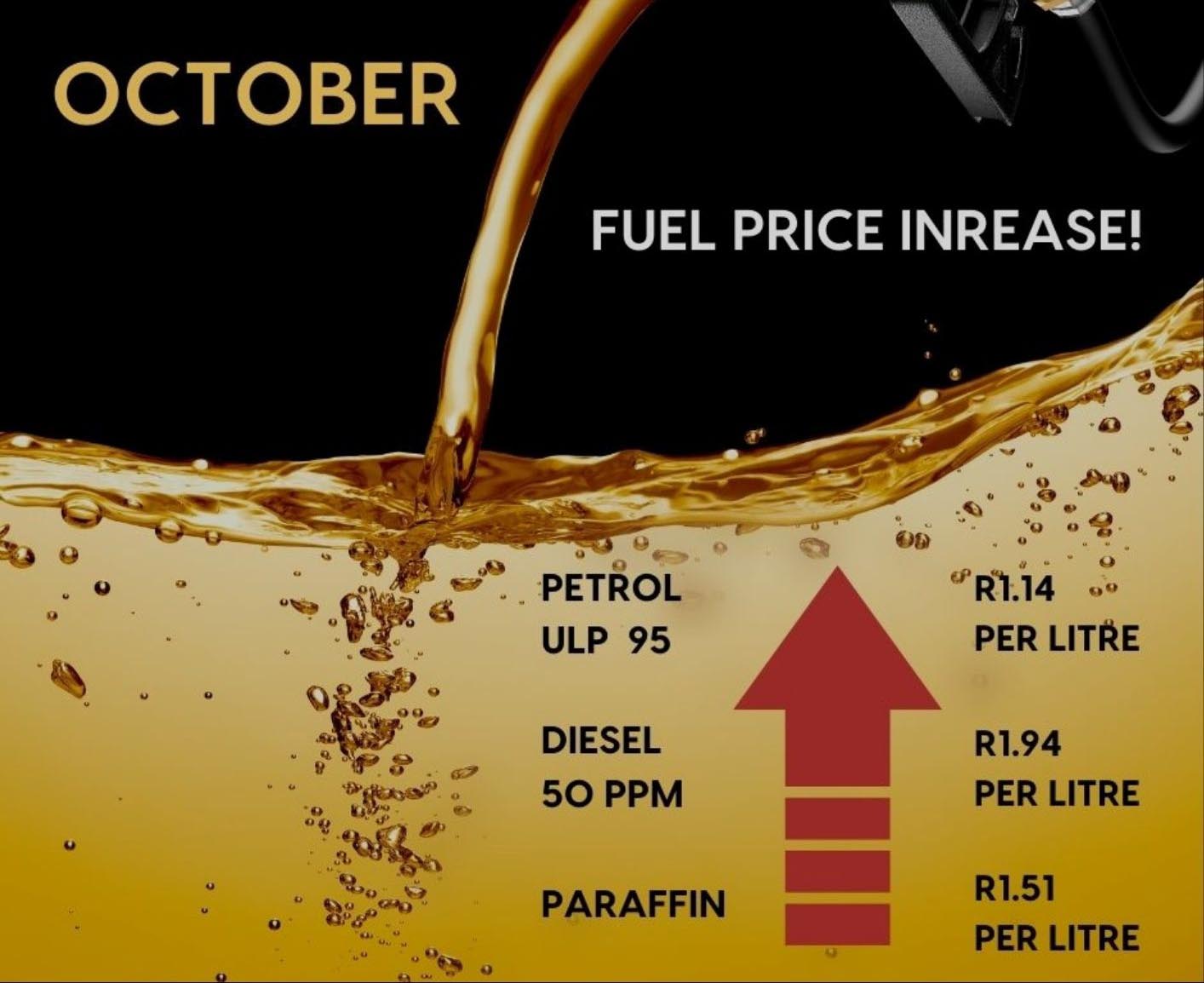
Recent times witnessed a substantial hike in diesel prices, surging by R2.76 to R2.84 per liter. Alarming mid-month data forecasts further increments, compounding the financial woes of already financially strained motorists. These increases ripple through the economy, inflating the prices of various goods, particularly in the food sector. Concurrently, reliance on diesel-powered generators to combat recurring load shedding only exacerbates the issue.
GlobalPetrolPrices.com data positions South Africa as the 69th highest for diesel prices worldwide, with a liter averaging around R25.161. Remarkably, South Africans devote 5% of their daily earnings, significantly higher than countries like South Korea and the United States, where only 0.88% and 0.89% of daily income suffices for the same purpose. These statistics underscore the substantial impact of diesel prices on daily life and the broader economy, underscoring the urgency of sustainable solutions to mitigate this challenge.
Hope for Lower Fuel Prices in November Despite Israeli Conflict
The recent surge in Israeli-Hamas tensions led to oil price spikes, raising concerns about further fuel price hikes. However, as of October 10, there’s a glimmer of hope for November, with potential petrol price cuts exceeding R1.60 and diesel reductions of up to 30 cents, offering respite to South Africans grappling with sustained price increases.
In addressing these concerns, South Africa is diversifying its energy mix by investing in renewable sources, improving the efficiency of its fossil fuel infrastructure, and enhancing energy storage capabilities. Government policies and industry collaborations are focused on bolstering the resilience of the energy grid.
Energy security is not merely a technical issue; it’s a cornerstone for South Africa’s development and stability. A secure energy supply is essential for the nation’s progress and the well-being of its people, making it a top priority in the country’s energy agenda.
Fueling Resilience: Strategies for a Stable Supply Chain
In an ever-evolving world, supply chain resilience is crucial, especially in the fuel industry. Recent disruptions emphasize preparedness. Here are key strategies for a stable fuel supply chain:
Diversify Suppliers: Avoid reliance on a single supplier; diversify sources to reduce risk.
Real-Time Monitoring: Invest in monitoring systems for tracking fuel levels, consumption, and potential disruptions, facilitating timely adjustments.
Emergency Protocols: Develop clear emergency response plans, ensuring swift reactions to disruptions with communication and alternative supplier strategies.
Strategic Reserves: Maintain essential fuel reserves to navigate short-term disruptions effectively.
Collaboration: Collaborate with partners and stakeholders to enhance collective resilience. Resilience is paramount in an uncertain world. Implementing these strategies fortifies your fuel supply chain, ensuring seamless operations in the face of unforeseen challenges.
Driving Down Costs: South Africa’s ‘Special Tax’ Solution for Affordable Petrol
As South African motorists grapple with near-record petrol prices, Visvin Reddy, a spokesperson for the People Against Petrol and Paraffin Price Increase (PAPPPI), offers a unique solution. He suggests implementing a special tax on monopoly companies to bridge the fuel levy gap, potentially driving petrol prices down to approximately R10 per litre.
With fuel prices consistently climbing, these increases are straining the wallets of South African citizens. The impact is not limited to motorists but extends to food prices and the overall cost of living.
Reddy also advocates for boosting local fuel production. Companies like Sasol, which export fuel at lower prices than the domestic market, can help meet demand affordably. Additionally, by diversifying oil procurement sources, as India has done, South Africa can better shield itself from volatile international factors affecting fuel prices.
Reddy’s proposals offer a path to substantial relief, allowing South Africa to provide more affordable fuel to its citizens.
UAE’s “Net Zero” Gas Project Sparks Controversy Ahead of COP28
In the run-up to COP28, UAE’s ADNOC has greenlit contracts for the Hail and Ghasha offshore fields, asserting its ambition to operate with “net zero emissions.” However, critics, including the Climate Action Tracker group, have derided this claim as “misleading.” As environmental concerns gain prominence on the global stage, the project is set to fuel discussions surrounding the carbon footprint of such initiatives, making it a focal point in the climate conversation during the conference in Dubai.
Energy Security in South Africa: Ensuring a Stable Supply
In the dynamic landscape of South Africa’s energy sector, energy security emerges as a critical concern in 2023. It encompasses the reliability of the fuel supply chain and strategies to maintain a stable energy supply. This issue is pivotal, affecting not only the nation’s economic growth but also the daily lives of its citizens.
South Africa, heavily reliant on fossil fuels, faces challenges linked to global market fluctuations and geopolitical tensions that can disrupt its energy supply chain. As the nation transitions towards cleaner and more sustainable energy solutions, balancing this transformation with the need for uninterrupted power becomes crucial.
Fueling Concerns: South Africa’s Looming Fuel Crisis Sparks Alarm
South Africa is on the brink of a fuel crisis with rising demand and a crippling lack of refining capacity. At present, only three out of the nation’s six refineries are operational, and a mere 35% of refinery design capacity remains available. Ayanda Noah, Chairperson of the Central Energy Fund (CEF), delivered this sobering message at the African Oil Week. This dire situation has led to increased imports and steep costs, with a prediction that 53% of refined fuel products will be imported by 2025.
Noah emphasized the urgency of the issue, noting how refinery closures have hurt production, impacted multiple sectors, and exacerbated unemployment. She stressed the need for investment in exploration and suggested recent discoveries might hold the key to revitalizing South Africa’s refining capacity. However, these endeavors have faced considerable opposition, necessitating better communication with stakeholders to leverage the nation’s abundant energy resources effectively.